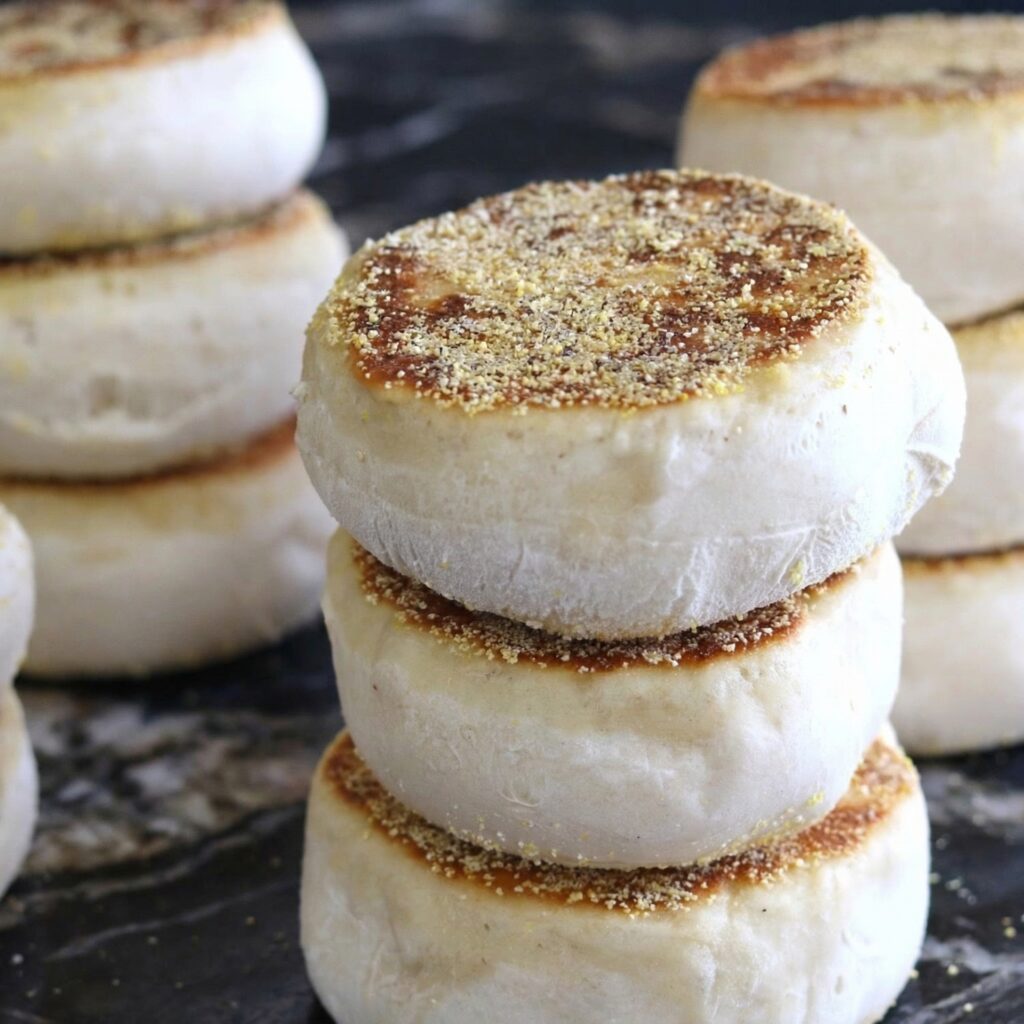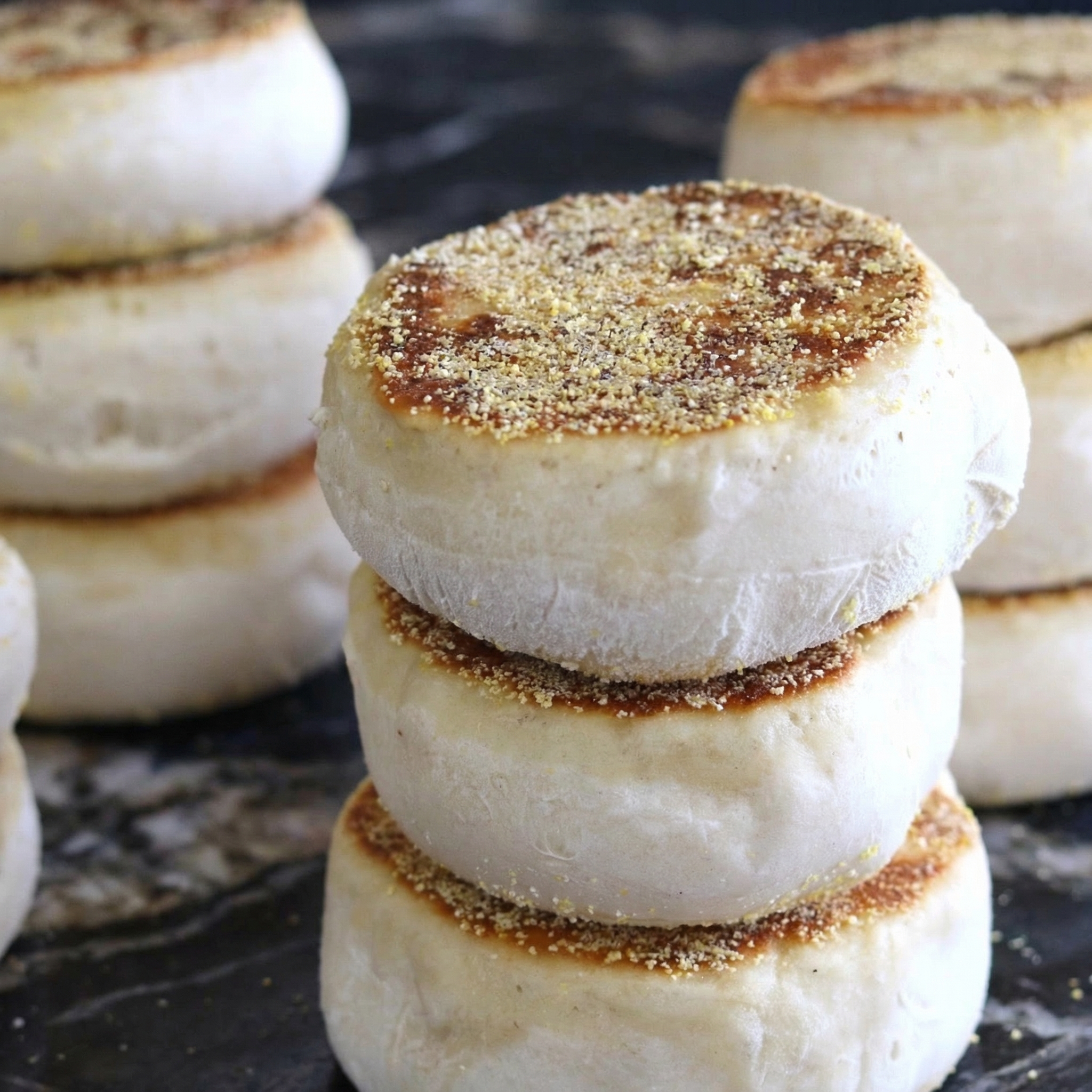
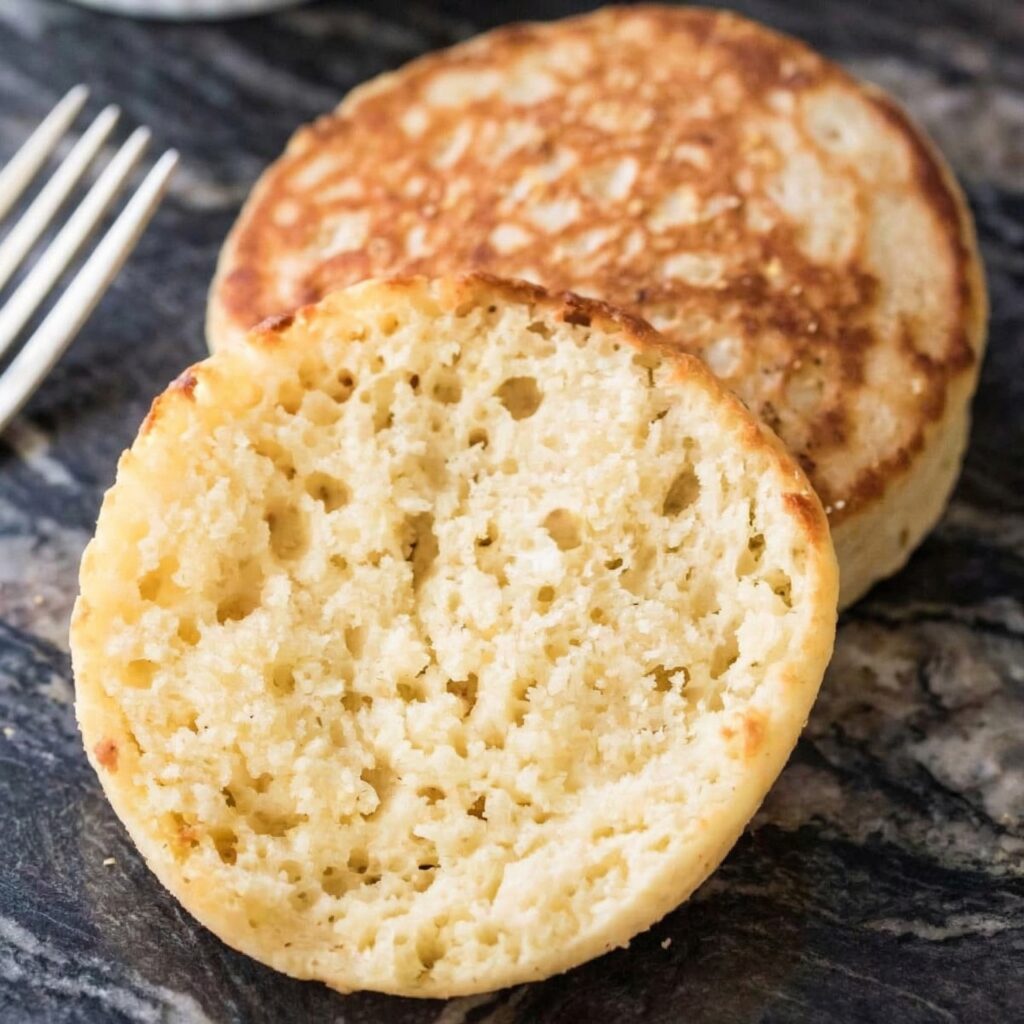
Few breakfast foods are as satisfying as a warm English muffin fresh from the skillet. With their crisp golden exterior and soft interior full of signature “nooks and crannies,” English muffins are perfect for butter, jam, eggs, or even a classic breakfast sandwich.
Making them with sourdough starter elevates the flavor even further, adding a subtle tang and a deeper, more complex taste.
Unlike many breads, English muffins are not baked in the oven. Instead, they are cooked on a griddle or skillet, which creates their signature texture and lightly toasted crust.
While they may seem like a bakery specialty, they are actually simple to prepare at home with a little patience and a good sourdough starter.
In this guide, you’ll learn exactly how to make soft, flavorful sourdough English muffins step by step, from mixing the dough to cooking them to golden perfection.
Why Use Sourdough?
Sourdough adds several benefits to English muffins.
First, it provides a gentle tang that balances beautifully with the richness of butter or sweet toppings. Second, the fermentation improves the dough’s texture, helping create the airy pockets that make English muffins so unique. Finally, it’s a great way to use up extra sourdough starter or discard.
The result is a homemade breakfast bread that tastes far better than most store-bought versions.
Ingredients
To make about 8–10 sourdough English muffins, you will need:
- 1 cup active sourdough starter
- 1 cup warm milk
- 2 cups all-purpose flour
- 1 tablespoon sugar or honey
- 1 teaspoon salt
- 1 tablespoon softened butter
- ½ teaspoon baking soda
- Cornmeal for dusting
These simple pantry ingredients come together to create a soft, slightly tangy dough that cooks beautifully on the stovetop.
Step 1: Mix the Dough
In a large mixing bowl, combine the sourdough starter, warm milk, and sugar or honey. Stir until the mixture is smooth.
Next, add the flour, salt, and softened butter. Mix everything together until a soft dough forms. The dough should feel slightly sticky but manageable.
If the dough seems too wet, add a tablespoon of flour at a time until it holds together.
Step 2: Knead the Dough
Transfer the dough to a lightly floured surface and knead it for about 5–7 minutes.
Kneading helps develop gluten, which gives the muffins structure and helps them rise properly.
The finished dough should be soft, smooth, and slightly elastic.
Step 3: First Rise
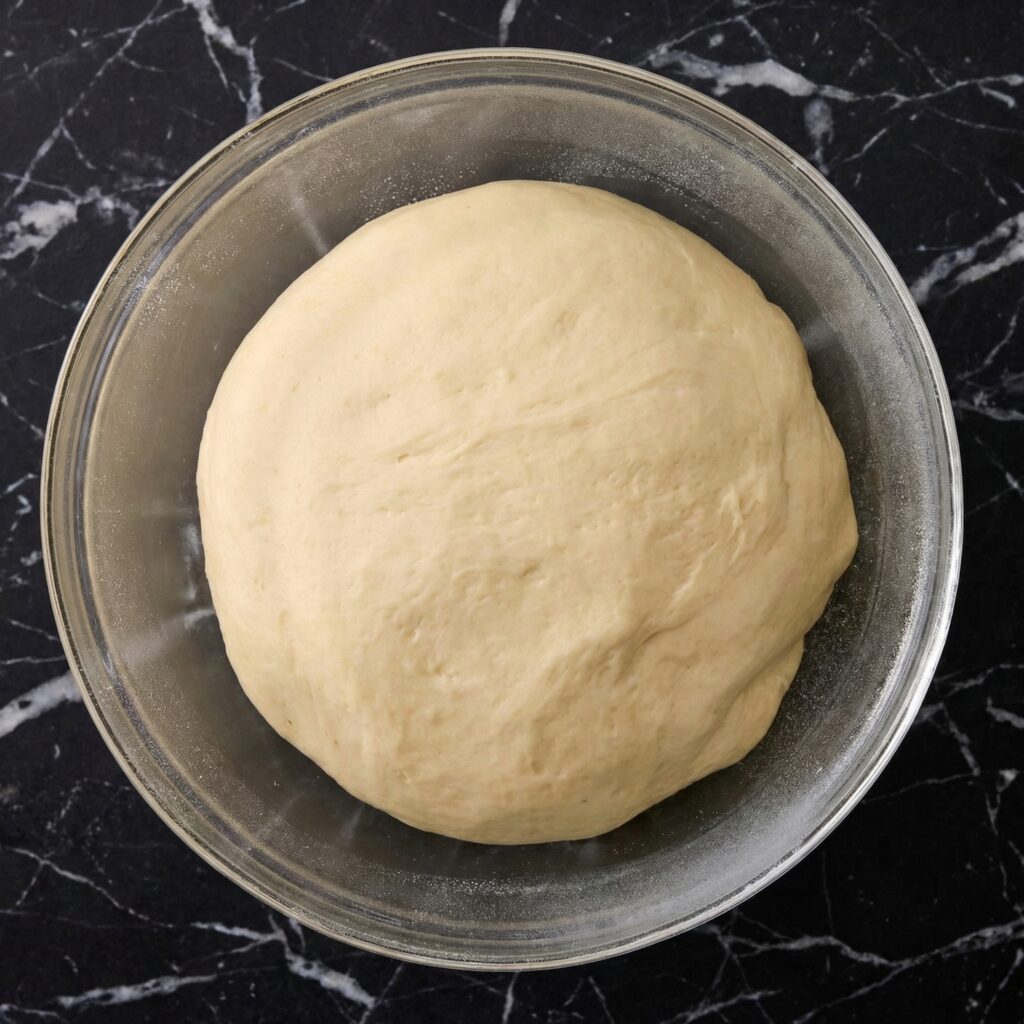
Place the kneaded dough into a lightly greased bowl.
Cover it with plastic wrap or a clean kitchen towel and let it rise at room temperature for 4–6 hours, or until it doubles in size.
Because sourdough rises more slowly than yeast-based dough, patience is key. This slow fermentation is what develops the rich flavor.
Step 4: Add the Baking Soda
Once the dough has risen, gently press it down to release excess air.
Sprinkle the baking soda over the dough and knead lightly for a minute or two to incorporate it evenly.
The baking soda reacts with the sourdough’s natural acidity and gives the muffins an extra lift during cooking.
Step 5: Roll Out the Dough
Turn the dough onto a lightly floured surface.
Use a rolling pin to roll it out to about ½ inch thick.
This thickness ensures the muffins cook evenly while developing their signature interior texture.
Step 6: Cut the Muffins
Using a round cutter, biscuit cutter, or drinking glass, cut circles from the dough.
Place the cut rounds onto a baking sheet that has been generously dusted with cornmeal.
The cornmeal prevents sticking and gives English muffins their classic slightly crunchy base.
Gather any leftover dough scraps, reroll them, and cut additional muffins.

Step 7: Second Rise
Cover the cut muffins loosely with a kitchen towel.
Allow them to rest and rise for 30–45 minutes. During this time they will puff slightly and become lighter in texture.
This short second rise helps create the airy interior.
Step 8: Preheat the Skillet
Place a large skillet, cast iron pan, or griddle over medium-low heat.
Lightly grease the surface with butter or oil.
Cooking at moderate heat is important so the muffins cook through without burning on the outside.
Step 9: Cook the English Muffins
Place several muffins in the skillet, leaving space between them.
Cook for about 6–8 minutes per side, turning carefully with a spatula.
The muffins should develop a deep golden crust while the inside cooks through slowly.
If the muffins brown too quickly, reduce the heat slightly.
When done, they should feel firm on the outside but soft when gently pressed.
Step 10: Cool and Split
Transfer the cooked muffins to a wire rack to cool for about 10 minutes.
For the best texture, split the muffins using a fork rather than a knife. Insert the fork around the edges and gently pull the halves apart.
This technique preserves the famous “nooks and crannies” that hold melted butter and toppings perfectly.
Tips for Perfect Sourdough English Muffins
Cook on medium-low heat. This prevents burning while allowing the centers to cook completely.
Use cornmeal generously. It keeps the dough from sticking and adds traditional texture.
Split with a fork. This maintains the airy interior rather than compressing it.
Be patient with fermentation. Longer rising times create better flavor.
Serving Ideas
Sourdough English muffins are incredibly versatile.
They are delicious when served with:
- Butter and jam
- Honey or maple syrup
- Peanut butter
- Fried eggs and bacon
- Avocado and poached eggs
They also make an excellent base for breakfast sandwiches or mini pizzas.
Final Thoughts
Homemade sourdough English muffins are a wonderful way to bring bakery-quality bread into your kitchen.
With their golden crust, soft interior, and signature tangy flavor, they offer a delicious upgrade from store-bought versions.
While the process requires a little time, most of it is hands-off fermentation that develops incredible flavor. Once you taste a warm sourdough English muffin fresh from the skillet, you’ll understand why this classic breakfast bread has remained a favorite for generations.
Toast one, add a generous spread of butter, and enjoy the comforting flavor of homemade sourdough goodness.